
Thoughtful interior design is about more than creating beautiful spaces. It is about shaping homes that support everyday life, bringing a sense of calm, comfort and wellbeing through considered design.
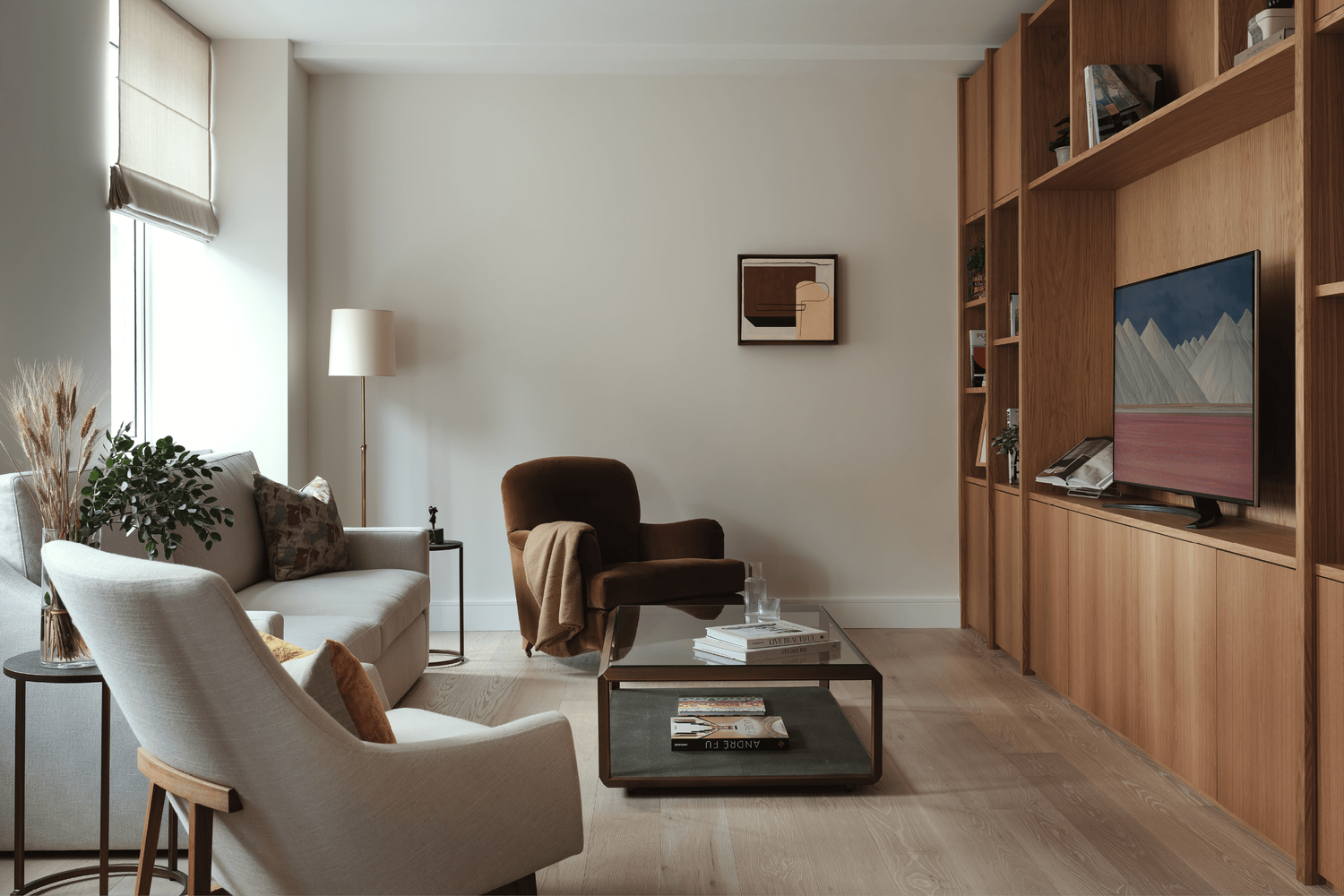
We often think about interiors in terms of how they look.
The colour of the walls. The materials. The furniture. Yet the homes we remember most are rarely defined by any one object. They are remembered because of how they make us feel.
Calm. Comfortable. Effortless.
That feeling is rarely accidental. It is the result of hundreds of carefully considered decisions, many of which are almost invisible once a home is complete.
Every project begins with understanding not only how our clients live today, but how they want their home to support them for years to come.
Beyond decoration
Interior design is often associated with colours, fabrics and furniture, but those decisions come much later in the process. The foundations of a successful home are usually much quieter. How natural light moves through a room throughout the day, whether circulation feels intuitive, the proportion of a piece of joinery, the relationship between one room and the next, or storage that disappears quietly into the architecture rather than competing with it. Individually, these decisions may seem small, but together they shape how a home feels to live in every day.
The most successful interiors are rarely the ones that demand attention. More often, they are the homes where everything feels considered without feeling over designed. Spaces that quietly support the people who live there, making everyday routines feel effortless.
Designing with wellbeing in mind
The relationship between our surroundings and our wellbeing is often underestimated. A home that feels cluttered or disconnected can create small moments of frustration throughout the day, whilst a thoughtfully designed home can quietly support everyday life, allowing routines to flow more naturally.
For us, this is not about creating minimalist interiors or following a particular aesthetic. It is about designing spaces that feel balanced, functional and deeply personal. A calm home is not necessarily an empty one; it is simply one where every decision has been made with intention.
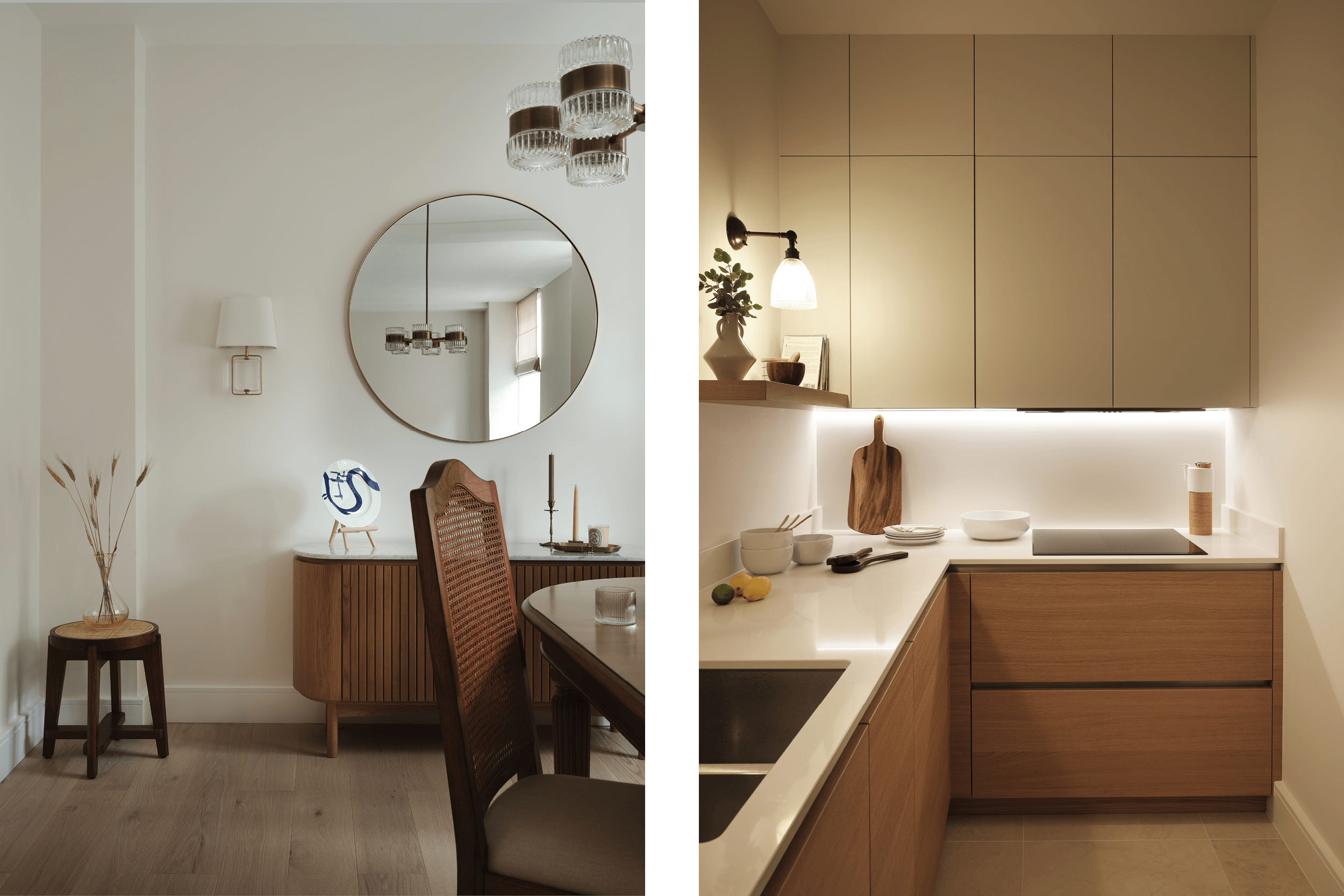
Light comes first
If there is one element that has the greatest influence on how a home feels, it is natural light. The way light enters a room, changes throughout the day and interacts with different materials all contribute to the atmosphere of a space.
Designing for light does not always require structural changes. Often it is about thoughtful planning. Window treatments that frame rather than block daylight, carefully positioned furniture, natural finishes that reflect light softly, and layered lighting that allows a room to transition effortlessly from day into evening. These are the details that people often notice without quite knowing why.
Colour that feels timeless
Colour is rarely about following trends. Instead, it should support the atmosphere you want to create. Some of the calmest interiors use rich, enveloping colours, whilst others rely on soft neutrals. What matters is not whether a palette is bold or understated, but whether it feels cohesive.
Natural materials, muted tones and carefully balanced palettes allow the eye to move comfortably through a space. Rather than competing for attention, each element works together to create a sense of harmony that feels timeless rather than tied to a particular moment.
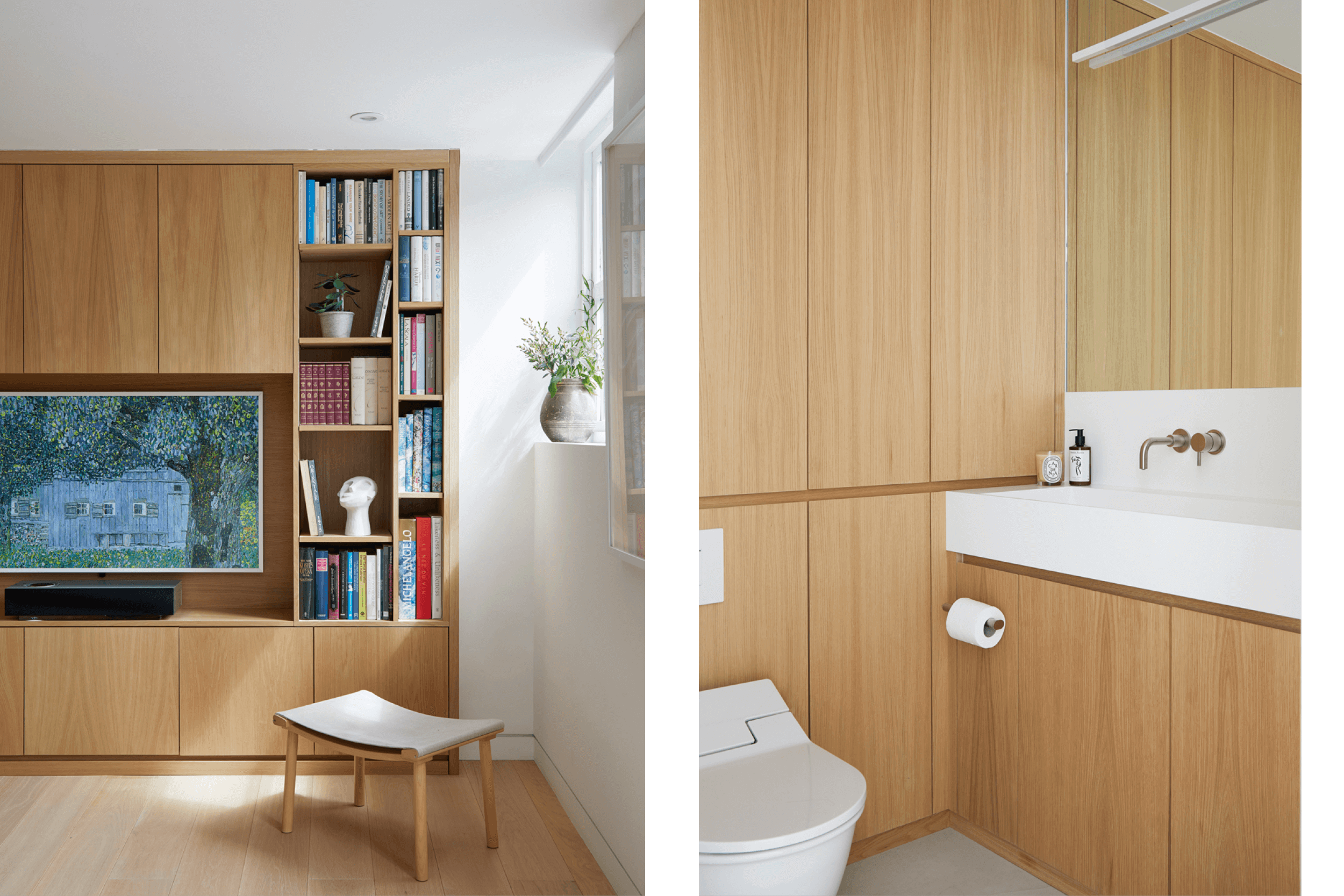
Storage that supports everyday life
The best storage is often the storage you barely notice. Bespoke joinery allows practical requirements to disappear into the architecture, leaving rooms feeling calm rather than crowded. It is one of the reasons we spend so much time refining these details at the beginning of every project.
The answers are rarely found in a decorative object or a particular finish. More often, they are resolved through thoughtful planning and bespoke joinery that allows storage to become part of the architecture. When everyday clutter has somewhere to go, the home naturally feels calmer, more organised and easier to live in.
The importance of texture
Whilst colour often receives the most attention, texture is what gives a room warmth, depth and longevity. Linen, wool, timber, stone and aged metals all bring a richness that synthetic materials rarely achieve, whilst also developing character over time.
A home should never feel static. It should evolve alongside the people who live within it, becoming softer and more personal with each passing year. Choosing materials that age beautifully is one of the simplest ways to create interiors that remain relevant long after trends have moved on.
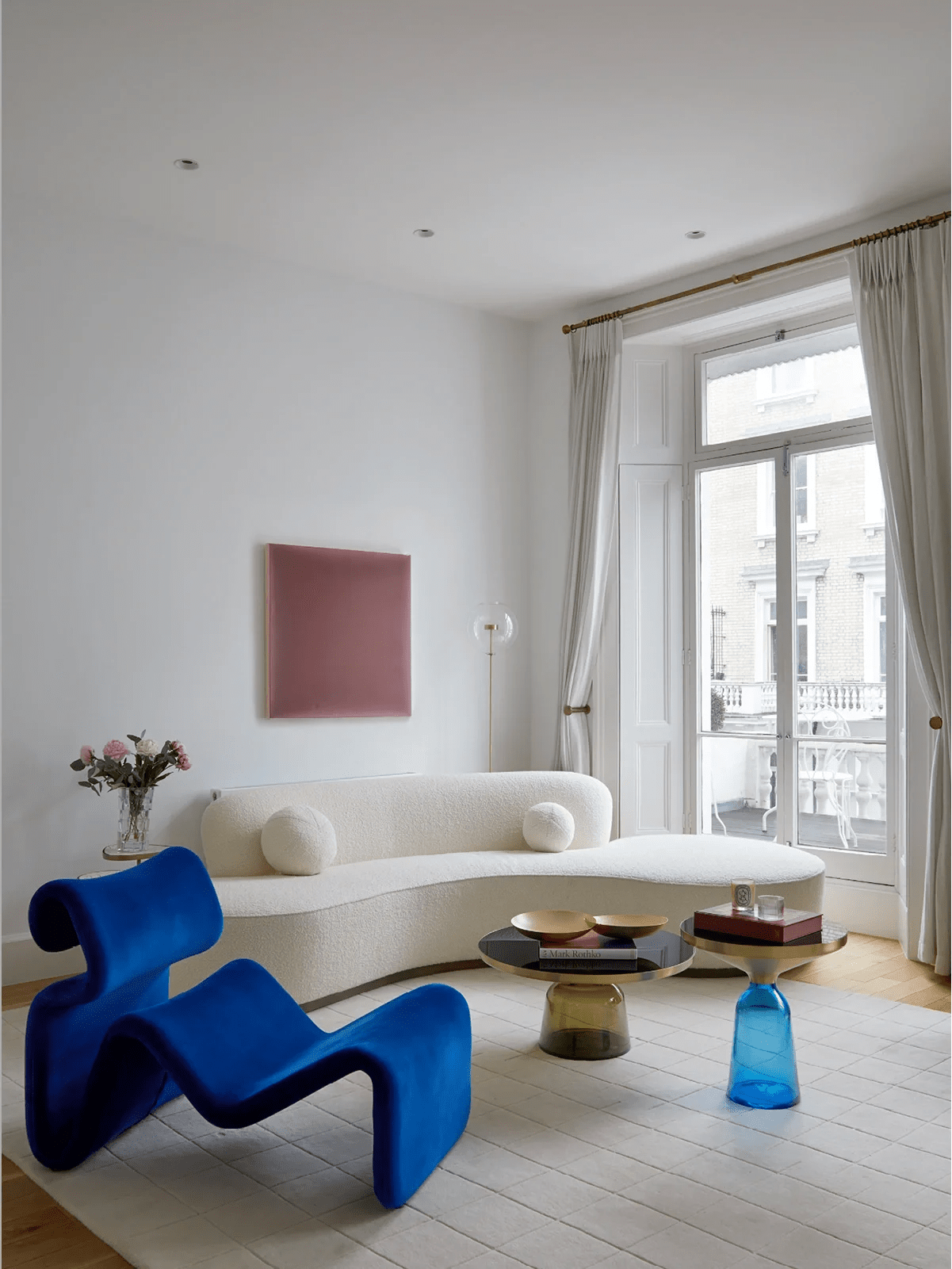
Designing around people
Every project begins with understanding how our clients want to live before we begin thinking about how a home should look. How do they spend their mornings? Where does everyone naturally gather? How do they entertain? What is not working in their current home?
Those conversations become the foundation for every design decision that follows. Rather than designing around trends, we design around people. The most successful interiors are those that feel entirely natural to the people who live in them, as though they could not have been designed any other way.
A home that quietly supports everyday life
The homes we enjoy spending time in are rarely the ones that demand attention. They are the ones that feel calm, comfortable and effortless. Homes where everything has been considered, yet nothing feels overdesigned. Spaces that quietly support the people who live in them—not just on the day they are photographed, but for years afterwards.
Ultimately, we do not believe the most successful homes are the ones that attract the most attention. They are the ones that quietly support everyday life, allowing the people who live there to feel calm, comfortable and completely at home. Beautiful interiors are simply the result.
Considering a project?
Every project begins with a conversation. If you are planning a renovation, refurbishing a period property or creating a home from the ground up, we would be delighted to hear about your plans.
Get in touch to arrange an initial consultation and discover how we can help create a home that feels considered, timeless and entirely your own.