
How Interior Design Affects Your Wellbeing at Home
The spaces we live in do more than provide shelter. They shape how we feel, how we rest, and how we move through our days.
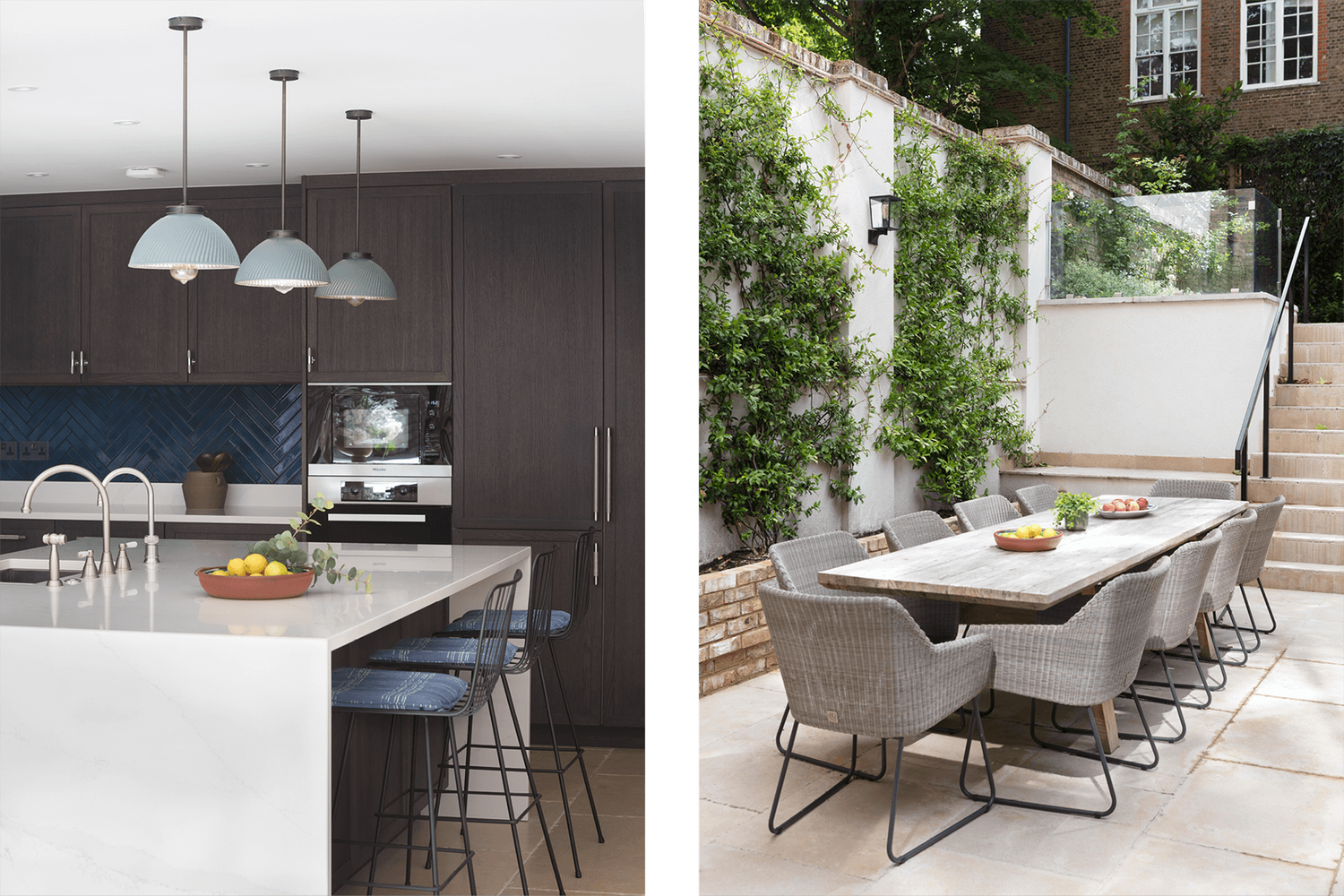
The connection between space and how we feel
There is a moment, when you walk into a well-designed room, where something shifts. It is not always easy to name. The light is right. The proportions feel generous. There is nowhere your eye snags on something out of place. You simply relax.
This is not accidental. It is the result of a series of considered decisions - about space, light, material, colour, and layout - that work together quietly to support the people who live there. Good interior design does not announce itself. It makes your life feel slightly easier, calmer, and more like yours.
I have thought a great deal about the relationship between the spaces we inhabit and how they make us feel. It is, at its core, why I do this work. This piece explores that relationship: what the research says, what I have observed across many years of residential projects, and what it means in practice when you are designing a home.
The science behind it
Research into environmental psychology has been building for decades, and the findings are consistent: the spaces we occupy have a measurable effect on our mood, stress levels, cognitive function, and even our physical health.
Natural light is one of the most significant factors. Exposure to daylight regulates our circadian rhythms, supports better sleep, and reduces the symptoms of anxiety and low mood. A room that is planned around its light - rather than treating light as an afterthought - will feel fundamentally different to one that is not.
Clutter and visual noise have a similarly measurable effect. Studies consistently show that disordered environments elevate cortisol levels - the stress hormone. This does not mean that every home should look like a showroom. It meansthat thoughtful storage, considered layouts, and a disciplined approach to what you bring into a space all contribute to how calm it feels to live in.
Colour and material also play a role, though these are more nuanced. Warm, natural tones tend to be more restorative than cool or saturated ones. Tactile materials - linen, timber, stone, wool - engage the senses in a way that synthetic finishes rarely do. The cumulative effect of a scheme built on these principles is a space that feels genuinely restful rather than merely tidy.
“A well-designed home does not need to be perfect. It needs to be honest, considered, and genuinely suited to the people who live in it.”
What this looks like in a real home
The principles above are straightforward enough in theory. In practice, applying them to a real home - with its particular proportions, its aspect, its architectural quirks, and the specific needs of the people who live there - is where the skill lies.
A few examples from my own work illustrate what this looks like.
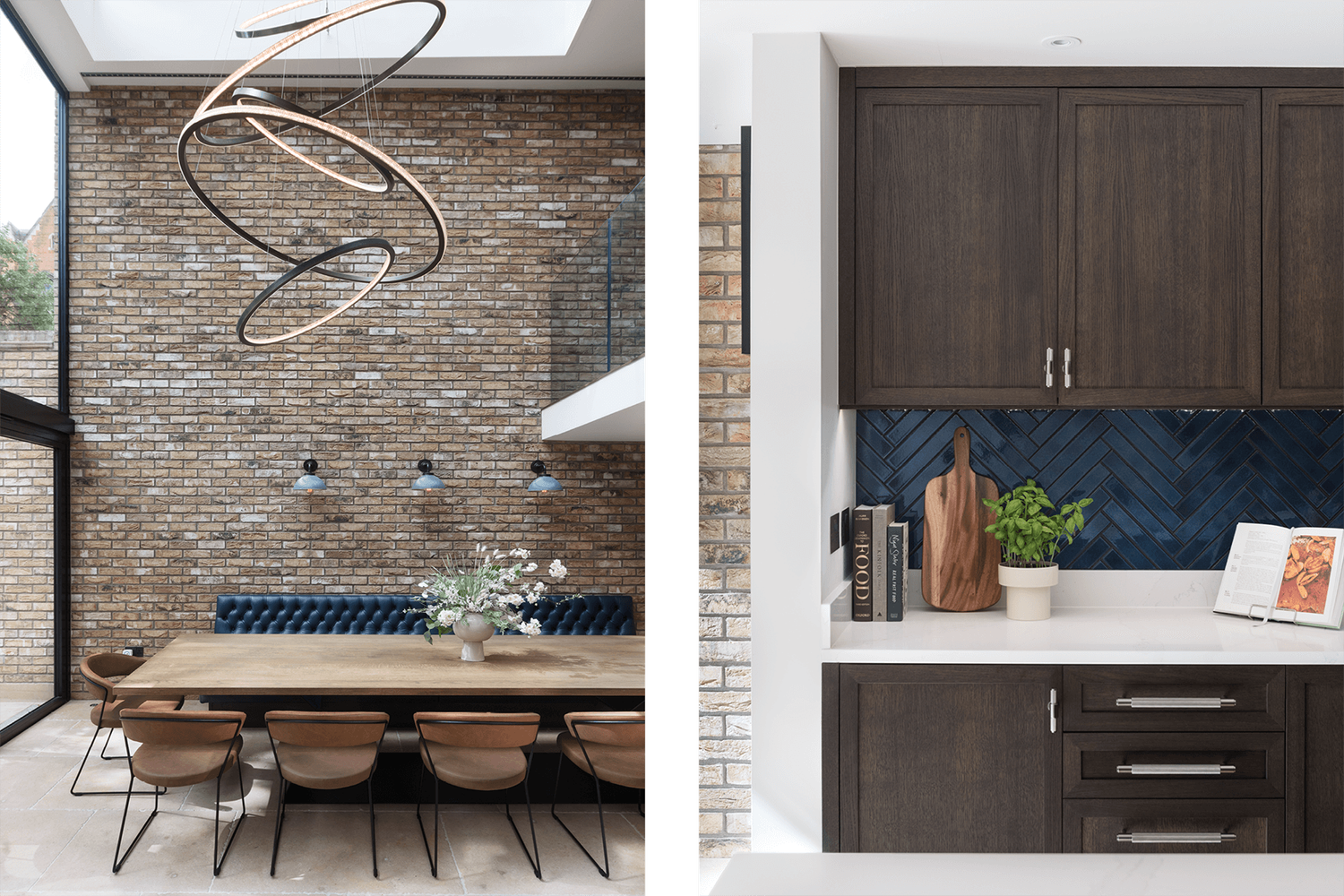
Light and proportion: Little Venice Georgian Townhouse
The Little Venice Georgian Family Townhouse is a five-bedroom period property by Regent’s Canal - an award-winning project that involved carefully balancing the original Georgian architecture with the needs of a contemporary family. One of the central decisions was how to treat light and proportion across the main living spaces. Rather than filling the rooms with furniture, we kept the footprint relatively open, letting the height and scale of the original architecture breathe. Warm dark timber flooring grounds the ground floor spaces, and a reimagined mezzanine with a feature chandelier creates a moment of genuine drama without overwhelming the calm of the overall scheme.

Simplicity and sanctuary: A Modern European Retreat
Perhaps the clearest illustration of design in service of wellbeing is the St John’s Wood pied-à-terre we completed for an international family who needed a London base that felt like an immediate sanctuary on arrival. The brief was deliberately minimal: calm, low-maintenance, effortlessly elegant. Warm timber flooring throughout, a soft neutral palette, and furniture sourced from Scandinavian and Belgian design houses for their craftsmanship and restraint. No visual noise. No decisions to make when you walk through the door. Just a space that restores you.
“The spaces we live in are not a backdrop to our lives. They are part of them. The question is whether they are working for us or against us.”
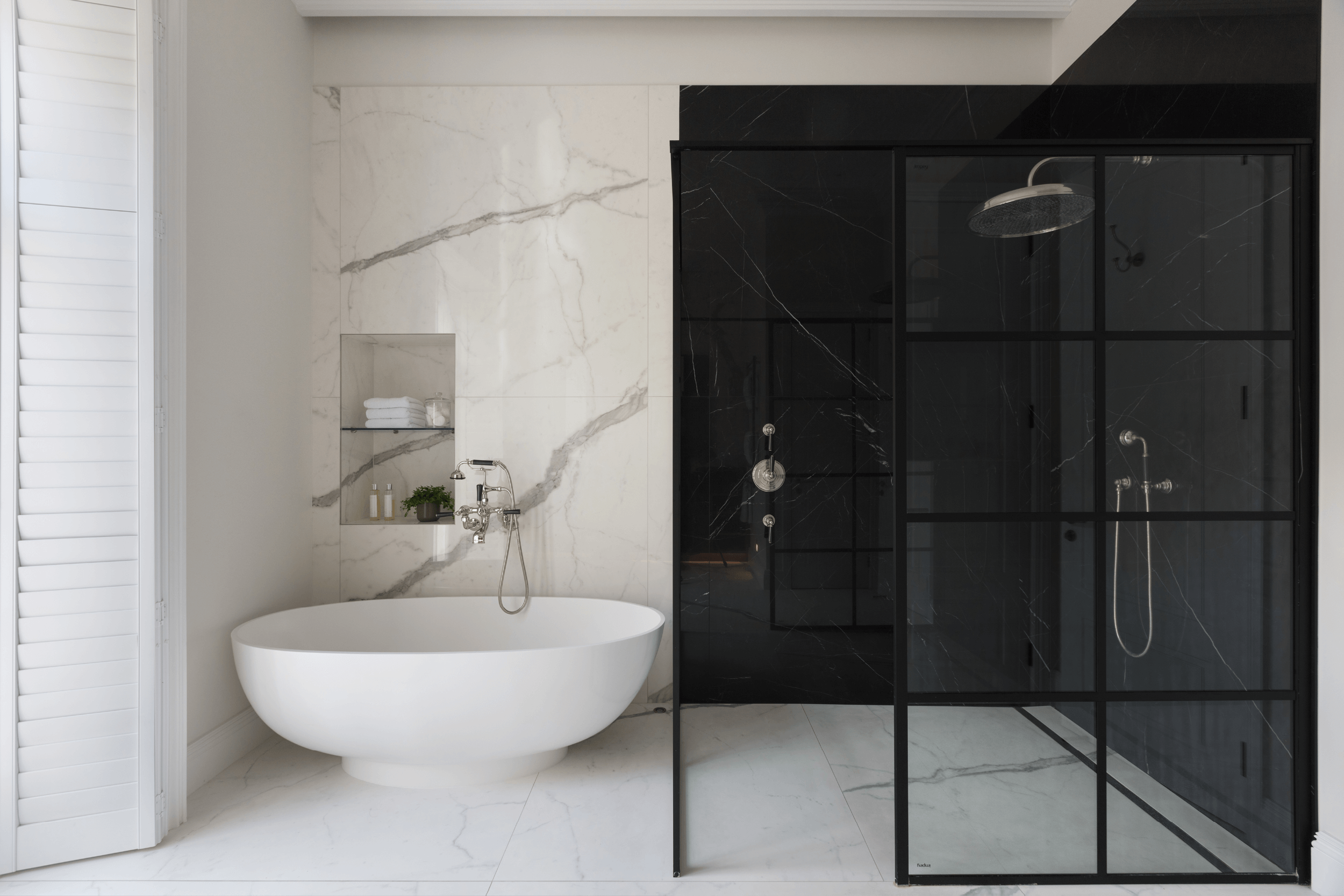
The decisions that make the most difference
In my experience, the things that have the greatest effect on how a home feels are not always the most expensive or the most visible. They tend to be the decisions made early - at the planning and spatial stage - that establish the conditions for everything that follows.
Layout and flow
How a home is laid out - how rooms connect, how circulation works, where you move naturally and where you feel blocked - affects how it feels to live in it every single day. A well-planned layout is one of the most invisible but most impactful things a designer can contribute.
Natural light
Every project I work on starts with a serious conversation about light: which rooms get it, at what time of day, and how the design can maximise it. Windows are placed or framed to draw light in. Mirrors are used deliberately. Pale, warmmaterials are chosen to reflect rather than absorb. Artificial lighting is layered and planned from the outset - not added at the end when the walls have already been plastered.
Materials and texture
The materials you live with every day matter more than most people realise before they have experienced the difference. Natural materials - timber, linen, stone, wool - have a warmth and authenticity that synthetic alternatives do not. They age well. They engage the senses in a way that supports rather than depletes. I choose them not for their looks alone but for how they feel to live with over time.
Storage and order
A home that cannot absorb the reality of daily life will never feel calm, however beautiful its surfaces. Good storage design is one of the least glamorous but most important parts of what I do: understanding what needs to be accessible, what can be concealed, and how to build a framework that makes order the default rather than the exception.
Restraint
Perhaps the most important principle of all is knowing when to stop. Every space has a point beyond which adding more - more furniture, more objects, more pattern, more colour - begins to work against it. The discipline of restraint, of leaving space for a room to breathe, is something I think about on every project. It is also, in my experience, the thing clients most often thank me for after the fact.
A note on the boutique approach
The reason I work the way I do - as a small, founder-led studio, personally overseeing every project from brief to completion - is directly connected to everything I have described above. Designing a home that genuinely supports your wellbeing requires an understanding of how you actually live. That cannot be delegated. It takes time, conversation, and a genuine interest in the person in front of you. You can read more about how I work and what that means in practice on the about page.
If you are interested in exploring what this could look like for your home, you are welcome to browse completed projects for a sense of the work, or to get in touch directly.
Thinking about your own home?
If something in this piece has resonated - if you recognise the gap between how your home feels and how you would like it to feel - I am always happy to have an initial conversation.
You can explore the full range of services or get in touch via the enquiry page.